Monday, November 10, 2014

Has the fuse been lit? (updated)


Over the past few days, the north of Israel caught fire...

Read the Daily Beast's even-handed, non judgemental account of the conflagration here. I thought it was excellent, and can't wait for Garnel and Temujin to tell me why it was actually written by the ghost of Joseph Goebbels.

Unless Israel makes a dramatic gesture, such as indicting the police officers who shot the kid in Cana,  [UPDATE: I am not saying the cop should be indicted only as a gesture. I believe there is probable cause. This should have been clearer] or arresting the punks who lit the other kid on fire, [UPDATE: This refers to the 22 year old who was set on fire last weekend] I don't see how the situation can improve before it gets much worse.

Israel needs courage and leadership. Israel needs to demonstrate that the religious and civil rights of the million plus Palestinians who have neither stabbed anyone nor rammed anyone with a car will be honored and protected.

But all Israel stands to get is bluster and jingoism from angry clowns like Bennet and Netanyahu.

 Search for more information about ### at4torah.com

Good day to avoid FB


Today is probably a good day for me to be off Facebook. Worrying about the situation in Israel is bad enough without also being pissed at the crazy, hyperbolic racists.

If you can let my Facebook interlocutor M. Zoldan know that the post beneath this one is for him, that would be swell. TY

Sunday, November 09, 2014

Here's what Pshat is (updated)

What's Pshat? This is a tricky question because the words pshat and drash were not used the same way in every era, but you can usually determine which is which by remembering a few simple rules:

1) Pshat answers the question "what is written here?" A commenter using the pshat approach wants to know what the text is saying. Usually he will rely on information provided by the text itself, and will not use outside information; also, he will not be concerned with messages, moral or hidden meanings and allusions.

2) Though many medieval pshat interpreters were biased against supernatural interpretations (ibn Ezra, Rashbam, etc) other pshat interpreters such as Rashi and the pshat interpreters among Chazal did not share this prejudice. They allowed for pshat interpretation that invoked the supernatural.

3) Though we think of Chazal as being primarily concerned with drash, this isn't so. Often Chazal are attempting to tell us "what is written here" and nothing else. This puts the comment into the category of pshat. This rule holds even if the comment is collected in a midrash anthology like Genesis Rabba. Not everything found there is a drash comment.

 Examples

1) THE PILLAR OF SALT

Verse: In Genesis 19:26 we're told that Lots wife became a pillar of salt.
But Lot's wife looked back, and she became a pillar of salt.

Seeking to answer the question "What is written here" some pshat commentators say that Lots wife delayed and was simply killed in the storm of sulfur and salt that destroyed the city. They read "looked back" as an idiom for "took it slowly" or "neglected to move as fast as necessary." And they read "she became a pillar of salt" as a naturalistic event. Salt was falling on the city, and some of it landed on her. [Note: There can be more than one pshat reading of the same verse, as Rashi said: הלא כה דברי כאש נאם ה' וכפטיש יפוצץ סלע, מתחלק לכמה ניצוצות:]

Other pshat commentators like Rashi seem to think that the transformation into a pillar of salt was a supernatural one. (Perhaps he reads this way because the text here only mentions sulfur, with salt only introduced later in Deuteronomy.) Following the midrash, Rashi additionally supplies an explanation for Mrs. Lots fate, and that explanation which (a) uses material not found in the text and (b) supplies a moral message is drash, but his view of HOW (as opposed to why) she was transformed into salt is a pshat interpretation as that's what he sees written in the text.)

2) THE DAUGHTER OF PARO's ARM

Verse: Exodus 2:5 says that daughter of Paro stretched out her ama to grab the little basket that carried baby Moses.
Then Pharaoh's daughter went down to the Nile to bathe, and her attendants were walking along the riverbank. She saw the basket among the reeds and sent her [something] to get it.

On BT Sota 12A R. Judah and R. Nechamia argue about the meaning of the word ama. As I understand it [see my post here] this is a pshat argument. Both commentators are trying to determine "What is written here" and both [really: see my discussion here] are informed only by information provided in the text. And neither man suggests that there was anything magical or supernatural about how her arm was stretched out. It seems clear that what they have in mind is an ordinary, natural, non-miraculous stretch.

However, later an unnamed amora has a follow-up pshat question: Why did the Torah use the word ama (an unusual word for hand) if it could have said yad (the expected work) His pshat answer: It teaches us that [her arm] became lengthened. Again, because he is using information found in the text to explain "What is written here" this comment belongs to the category of pshat. There is no message, or moral or secret allusion here. The goal is simply to find out what the text is trying to convey.


Search for more information about pshat at4torah.com

Why the Israelis aren't like Rosa Parks.


I think the rules against Jews going on the Temple Mount are absurd and wrong, but guys, it's not worth risking lives over. Sure Israeli Jews have rights. They also have brains. Use them.

NOTE: Don't compare this to Rosa Parks, ok? The civil rights struggle was not about getting a better seat on a bus. It was about being recognized as fully human by the ethnic group that held all the strings. If you were black in America you couldn't vote, or get most jobs, or a decent education, or expect to be treated equally under the law. Rosa Parks moved ot the front of the bus because she wanted those things, not a better view of the driver, and these are all things Israelis Jews already have. In Israel, the dominant ethnic group (ie them) already recognizes them as fully human. 

ALSO:
Search for more information about ### at4torah.com

Friday, November 07, 2014

What is the Facebook struggle really about?

Some who support Facebook's decision to ban me, Pinky Shmekletein, the drag queens and countless others say Facebook is correct to expel us because they (the decision supporters) want to interact with "real people." But what does that mean? Is Pinky a bot? Am I a ghost? In what sense aren't we real people?

Ironically, what they are actually demanding is the opportunity to interact with people who are less real. When people use their real names they hide parts of themselves, especially when they are participating on a wide open platform like Facebook. How can you be real when an employer, or co-worker might be reading your thread? How can you be real when there's a chance your child might see it one day?

You've probably responded to the preceding paragraph in one of two ways. Either you understand exactly what I mean, and are nodding your head or you're protesting that the parts of your self that aren't suitable for public consumption don't belong on Facebook in the first place. But  the problem with that argument is that we can't know in advance which "public" will be seeing our Facebook activities nor can we predict how our future selves will feel about the views and behaviors of our present selves. Facebook behavior isn't like ordinary public behavior. After, I've e.g confessed my abiding crush on Keira Knightley to a friend in private, the experience fades and is soon forgotten. But if I do the same on a Facebook thread, its there forever, where anyone can find it. Under the current Facebook system your only choice is to conceal, ie, be less real or to roll the dice.

Those of us arguing for the right to be our authentic selves on Facebook, using names that we've chosen to represent those authentic selves, are asking for a third option. We don't want to participate on Facebook using our chosen names so that we can bully or intimidate. We have no interest in disrupting your experience. We simply want to use our chosen names so that we can share our true selves - our real views and our real behaviors - with friends who have chosen to interact with us.

Honestly, I think the only sort of people who would object to this, are people with very dark souls, indeed.  Because instead of simply choosing to block or ignore our Facebook presence, they want us to forfeit the Facebook experience entirely. Instead of tolerating (or ignoring or engaging with) our unconventional opinions they want us to stop talking, or to face social consequences for continuing to speak.  They're Monica of Friends, at her very worst, who needs everything just so and doesn't care about the damage her abiding need for order and control might cause others.


Search for more information about how to be real  at4torah.com

No Republican Jews in Congress, save one

There's only one, single Jewish Republican in Congress, and he seems to have loose lips:
"I’ve had the experience where I would go into a temple, and I may know the secret handshake..." -Lee M. Zeldin, the sole Jewish Congressperson in today Times
Um, just who authorized Mr. Zeldin to tell the media about the secret temple handshake? When the Elders find out about this they will be pissssssed.

Hey, why do you suppose the Republicans can't get Jews elected to Congress? My own view is that Jews, generally, oppose Republican candidates because they, generally, oppose douchebaggery, selfishness, and clueless morons who promiscuously mix religion and politics. Certainly, this is why I tend to find myself supporting Democrats (but not always).

Also, we're smart, see, so its harder for Rush-Limbaugh-style demagogues to rile us up with transparently phony BS.  Don't construe this to mean that I think Jewish Republicans are dumb- clearly, plenty of smart people vote GOP - but the GOP gets tons of mileage out of manipulating people who are dumb, and this  avenue isn't available to them in our community.


 Search for more information about Facebook's inability to recognize that legal names don't define our legitimate identities at4torah.com

Thursday, November 06, 2014

Why do radicals sing?


The first picture that comes to mind are black protesters singing "We Shall Overcome" during the civil rights struggle. Then, I remember the communists, way back when the Party was still the sort of thing a well-meaning bright-eyed humanist might join, also had songs. And so did the ficitional residents of Orwell's famous farm.

Now I am being told that the quasi-egalitarian Orthodox synagogues are all Carlbachian, ie: they sing as much as possible. This seems to be the Orthodox Jewish trend: the further to the left you go, the more likely you are to encounter a singing minyan. There's more of it in an MO shul than in a Hasidic shul, and more of it again when you reach the Calbachians.

Is it the same in other relgions? Are Muslims who want social change more likely to sing? And to what can it be attributed?

 Search for more information about the big sing along we banned from Facebook Jewish bloggers have planned at4torah.com

Innocent Mistake


Saw "This Journalist Smoked Crack So He Could Write This Article" cross my Twitter feed, and I swear I thought it was by a RW Zionist about Arabs...

... and not just because I had just finished Joe Settler's insane suggestion for bringing peace to Jerusalem. 
"I'm talking about massive numbers of Yassam police troops walking through the streets of Jerusalem, including Shuafat, Beit Hanina, Assawiya, A-Tor, and everywhere else the Arabs have brought their anarchy into, and using overwhelming force to quell these rioters when they dare raise their head."
 The New Republic
 Search for more information about about how Facebook bans Jews at4torah.com

We used to think Isaac was brought back from the dead (maybe)

This seems like a good time to discuss one of the neatest bits of parsha speculation I've ever come across. It relates to the Binding of Isaac on Mount Moriah, and the suggestion that his father, Abraham, actually killed him. Let me list and categorize the various piecesof evidence for your amusement and consideration

WHAT IT SAYS IN GENESIS

Abraham went through with it
וַיֹּאמֶר בִּי נִשְׁבַּעְתִּי נְאֻם יְהֹוָה כִּי יַעַן אֲשֶׁר עָשִׂיתָ אֶת הַדָּבָר הַזֶּה וְלֹא חָשַׂכְתָּ אֶת בִּנְךָ אֶת יְחִידֶךָ:
And he said, "By Myself have I sworn, says the Lord, that because you have done this thing and you did not withhold your son, your only one,

Abraham returned from the Akeida alone
וַיָּ֤שָׁב אַבְרָהָם֙ אֶל־ נְעָרָ֔יו וַיָּקֻ֛מוּ וַיֵּלְכ֥וּ יַחְדָּ֖ו אֶל־ בְּאֵ֣ר שָׁ֑בַע וַיֵּ֥שֶׁב אַבְרָהָ֖ם בִּבְאֵ֥ר שָֽׁבַע
And Abraham returned to his attendants and together they set off and traveled to Be'er Sheva. And Abraham settled in Be'er Sheva.

MIDRASH AGGADA

Zevchim 62a
[When the generations that returned from the Babylonian exile began to build the second temple,] “How did they know what to do with the altar? Said R. Eleazar: They beheld the altar all built and Michael, the Great Prince, stood by it sacrificing on it. But R. Isaac Napha said: They beheld Isaac’s ashes, that these lay on that spot.

Pirqe de Rabbi Elazer
Rabbi Jehudah said : When the blade touched his neck, the soul of Isaac fled and departed, (but) when he heard His voice from between the two Cherubim, saying (to Abraham)," Lay not thine hand upon the lad " (Gen. xxii. 12), his soul returned to liis body, and (Abraham) set him free, and Isaac stood upon his feet. And Isaac knew « that in this manner the dead in the future will be quickened. He opened (his mouth), and said : Blessed art thou, O Lord, who quickeneth the dead

Midrash Lekach Tov
“The God of Abraham and the Fear of Isaac: for Isaac was in the grip of fear as he lay bound on the top of the altar, and his soul flew out of him, and the Holy One, Blessed be He, restored it to him by means of the dewdrops for Resurrection of the dead”

Shibboley Haleket Hashalem
“When Father Isaac was bound on the altar and reduced to ashes and his sacrificial dust was cast on to Mount Moriah, the Holy One, blessed by He, immediately brought upon him dew and revived him. That is why David, may he rest in peace, said: ‘Like the dew of Hermon that cometh down from the mountains of Zion’ etc [Ps. 133:3] – for he is referring to that dew with which [the Holy One, blessed by He] revived Father Isaac. Forthwith the ministering angels began to recite, Blessed art Thou, O Lord, who quickens the dead

LATER AUTHORITIES

Rashi on Leviticus 26:52
And why is the expression “remembering” not used with Isaac? [Because] Isaac’s ashes Bereishith Rabbah 56:9; Tanchuma Shelach 14) [always] appear before Me, gathered up and placed upon the altar“ [and therefore, God does not have to ”remember" Isaac, for Isaac is never forgotten].

Rabbinic commentary on Genesis 27:27,
The verse that tells us the Isaac caught the scent of Jacob's clothing prior to blessing him, and was reassured, saying: Behold, the fragrance of my son is like the fragrance of a field, which the Lord has blessed! The midrash Tanchuma says that Isaac is, in fact, referring to the scent of Gan Eden. Can a man recognize the odor of a place he's never visited?

ADDITIONAL CLUES

The Haftarah reading assigned to Parshas Vayerah is 2 Kings 4:1-36 which tells of Elisha's resurrection of the Shunamite's son (however, other Vayerah parallels are there, too, such as Elisha's promise that the woman would bear a son)

The piyyutim we say on the High Holydays:
The Mogen Avraham blessing is associated with Abraham; as a result high holiday piyutim that celebrate Abraham are said before Mogen Avraham. The next set of piyutim are about Isaac and they are associated with the resurrection of the dead/ Mechayeh Maysim. Furthermore some of the Isaac piyutim hint at his own resurrection from the dead. 

    Search for more information about how Isaacs resurrection from the dead might parrallel my own Facebook resurrection at4torah.com

Wednesday, November 05, 2014

Footage from a few hours ago at the Gush junction


Cross Currents: Smarter than an astrophysicist


Am I the first to notice this howler in an old Cross Currents post? (unlikely, I know)

Here it is on October 29:

Put simply, the Big Bang Theory violates the known laws of physics. 
 

I don't even know how to begin explaining why this is stupid, not to mention breathtaking in its arrogance. In brief the author of this item, a layman who gets his science from Genesis, is challenging the prevailing cosmological model for the development of the universe. This model is supported by piles of observable evidence. It provides a comprehensive explanation of dozens of phenomenon. It is accepted by, basically, everyone in the scientific community. But this guy knows they are all wrong because  - whoopsie! - they all forgot to check if their "theory" fits the laws of physics.

Imagine the stupid look Stephen Hawking must have had on his face after reading Menken's article. Dr. Hawking probably asked his medical aid to lift his hand and use it to smack his forehead; then using his voice apparatus, he probably exclaimed: "Wow, a life of research and study, and I never checked to see if the prevailing cosmological model obeys the laws of physics! My colleagues in the astrophysics department at Oxford are all going to kick themselves when they hear about this!"

Anyway, if you're not as smart as Cross Currents and you want to see exactly how all those smarty-pant scientists make their theory work with the laws of physics you can ask Google, and in less than 10 seconds you'll be provided with eighty-zillion scholarly articles, plus plenty of stuff for laymen.  Here, let me steal from one of them:

There are many well-respected physicists, such as Stephen Hawking, Lawrence Krauss, Sean M. Carroll, Victor Stenger, Michio Kaku, Alan Guth, Alex Vilenkin, Robert A.J. Matthews, and Nobel laureate Frank Wilczek, who have created scientific models where the Big Bang and thus the entire universe could arise from nothing but a quantum vacuum fluctuation -- via natural processes.  
In relativity, gravity is negative energy, and matter and photons are positive energy. Because negative and positive energy seem to be equal in absolute total value, our observable universe appears balanced to the sum of zero. Our universe could thus have come into existence without violating conservation of mass and energy — with the matter of the universe condensing out of the positive energy as the universe cooled, and gravity created from the negative energy. When energy condenses into matter, equal parts of matter and antimatter are created — which annihilate each other to form energy. However there is a slight imbalance to the process, which results in matter dominating over antimatter. 
I know that this doesn't make sense in our Newtonian experience, but it does in the realm of quantum mechanics and relativity. As Nobel laureate physicist Richard Feynman wrote, "The theory of quantum electrodynamics describes nature as absurd from the point of view of common sense. And it agrees fully with experiment. So I hope you can accept nature as she is — absurd." 
For more, watch  "A Universe From Nothing" by Lawrence Krauss, or get his book 


Search for more information about great is is that we have laymen who know more than scientists at4torah.com

Israeli activist: Its all about meeeeee


The best thing I saw last night about the midterm massacre came from an Israeli activist who tweeted that the election results are a repudiation of Obama's Israel policy.

How's that for a spot on analysis? 

Because not only doesn't this activist realize that Obama has provided Israel with extensive military support, financial support and political support, but he also believes that the average American is a one-issue Israel voter just like he is. Precious, right?

Tuesday, November 04, 2014

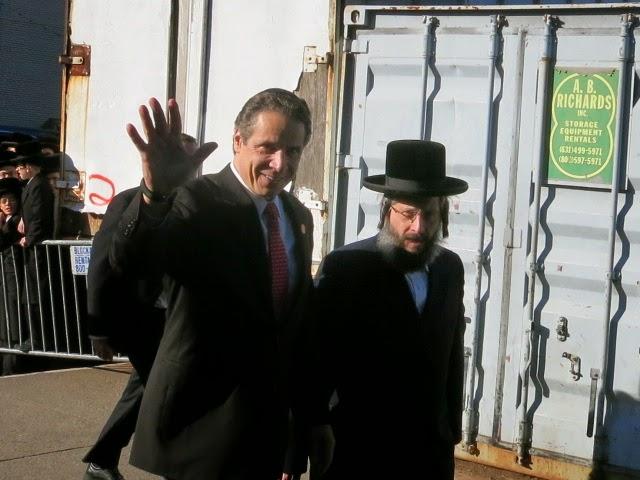
Cuomo's Ne'elah


One of Governor Cuomo's last campaign stops was in New Square, NY. Nothing disturbing about that. I mean, of course it makes perfect sense that he'd use the valuable final seconds of his campaign to visit an insular, private neighborhood where everyone votes as they are told.

Wonder what he needed to lock up, and how much it cost him.


Source is this dude's Twitter feed.


  Search for more information about ### at4torah.com

Republicans agree. Netanyahu is a pain in the ass

Here's James Baker, honcho in several Republican administrations,  co-signing the Obama administration's wary handling of Prime Minister PITA
Baker said that Netanyahu – then a senior Israeli official on foreign policy – had said that “American policy in the Middle East is based on lies and distortions” during the George H.W. Bush administration.

“I barred him from the State Department,” Baker said. “That may not be widely known.”
No, like every single negative thing Republicans do relating to Israel, that is not widely known.

Do me a favor and put this on Facebook. Thanks. I'm banned, see?


Text here Search for more information about ### at4torah.com

Well, that was fun while it lasted

As of this morning, my Facebook account has been disabled on the grounds that I was using a fake name. It only took them 5 years to catch on*. Not sure what I can do to reverse this decision. While I explore my options, the fun hijinks will continue here to the extent possible.

*Someone probably squealed.


Text here Search for more information about ### at4torah.com

Monday, November 03, 2014

Midrash case study:Jews were enslaved to punish Abraham for conscripting Torah scholars


Midrash case study!!!

On BT Nedarim 32a we were told that the Jews were enslaved to punish Abraham for conscripting Torah scholars for his war against the Kings in Genesis 14. The author of this midrash may have intended it in one of the following ways:

1. He could have meant it literally, believing that Abraham knew the Torah via prophecy

2. He could have meant it semi literally using the word Torah to refer only to the teachings that were known to Abraham at that point as already mentioned in the text plus whatever ethical lessons Abraham had himself uncovered

3. He could have meant it playfully as the Hebrew words he is addressing can be construed to pun as "he emptied his disciples" ie he emptied them of their Torah knowledge by forcing them to go to war

4. He could have meant it polemically as a warning against mistreating scholars

5. He could have meant it figuratively in which case all bets are off because a clever person can find any sort of figurative meaning in anything.

What's your vote?


 Search for more information about ### at4torah.com

Saturday, November 01, 2014

Salem for Sale


A guest post by Y. Bloch
The past ten days have been quite difficult ones for Jerusalemites. A week-and-a-half ago, a terrorist plowed his car into a crowd waiting for the light rail at Ammunition Hill, immediately killing a three-month-old baby in her grandfather's arms. Four days later, another young soul, an Ecuadoran convert who had emigrated to Israel after discovering her family's Jewish roots, succumbed to her wounds from that horrific attack. Three days after that, Rabbi Yehudah Glick, activist for Jewish prayer rights on the Temple Mount, was shot in an attempted assassination. This is merely the culmination of months of unrest in the capital, leading us to ask: what can make Jerusalem whole (shalem) again?
In fact, Shalem (Salem) is the first name used for Jerusalem, according to Jewish tradition (Onkelos et al.), in a verse from this morning's Torah portion, Lekh Lekha (Gen. 14:18): "And Melchizedek king of Salem brought forth bread and wine, and he was a priest of the Supreme God."
0522melchezidek0010Melchizedek according to the Orthodox. I didn't say which Orthodox.
However, this is not the only Salem in the Torah. Later in the book of Genesis (33:18), we read (following Rashbam's rendering): "And Jacob came to Salem, city of Shechem, which is in the land of Canaan, when he came from Paddan Aram, and he encamped before the city."
So we have Salem as an alternative name for two cities which figure prominently in Jewish history: Jerusalem and Shechem (modern-day Nablus). Indeed, the root shalem yield two important terms in biblical Hebrew: shallem (to pay) and, of course, shalom (peace).
This represents some heavy foreshadowing. Immediately after describing Jacob's arrival in "Salem, city of Shechem," the Torah notes (v. 19): "And he purchased the plot of land where he pitched his tent from the hands of the children of Hamor, patriarch of Shechem, for a hundred pieces of silver." After the taking of Dinah, Hamor and his son have this to say to the citizens of Shechem: "These men are shelemim with us. Let them dwell in the land, and they will trade therein. The land is wide enough for them" (34:21). Now, shelemim here may be taken as "Salemites" or "amenable," but what is clear that this quality indicates that despite the outrage over what has happened to Dinah, her family will forget it all for the right price.
What else is for sale in Shechem-Salem? The story of the sale of Joseph, just a few years later, begins with Jacob's fateful proclamation (Gen. 37:13), "Aren't your brothers shepherding in Shechem? Go, and I will send you to them." The climax of that crime is Judah's famous question (vv. 26-27): "What profit is there in killing our brother and covering his blood? Let us sell him to the Ishmaelites..."
Centuries later, in Shechem once again, the scion of Joseph, Jeroboam, poses a challenge to the scion of Judah, Rehoboam (I Kings 12:4): "Your father was a hard master. Lighten the harsh labor demands and heavy taxes that your father imposed on us. Then we will be your loyal subjects." Rehoboam response is, unsurprisingly: shallem, pay up. “My father laid heavy burdens on you, but I’m going to make them even heavier! My father beat you with whips, but I will beat you with scorpions!” (v. 14) And so the other tribes desert the Davidic dynasty (and murder the man whom Rehoboam sends to collect his super-sized taxes). You would think Rehoboam, a native of Jerusalem, would know better than to head to Shechem for his coronation, considering how badly it ended for the first man who tried to buy the throne of Israel there, Abimelech (Judges 9).

In Shechem-Salem, it's all about the almighty shekel. And it always ends badly.
But Jerusalem-Salem is supposed to be a different place. It is the city of peace, but that peace is not based on getting a piece of the action. Isaiah speaks eloquently of this time after time. "Rise from the dust, Jerusalem, sit in a place of honor... You were sold for nothing, and it is not with money that you will be redeemed" (52:2-3). With what, then? "I will restore your judges as at first, and your counselors as at the beginning. Afterwards, you will be known as the city of righteousness, faithful town. Zion will be reclaimed with justice, and its returnees with righteousness" (ibid. 1:26-27).
It is no coincidence that the king of Salem is named Melchizedek (nor that the first to carry the full title "king of Jerusalem," in the time of Joshua, is Adonizedek). Tzedek (righteousness) is the only currency valid in Jerusalem. It is the only way to make the city whole.
That is why Melchizedek's meeting with Abram interrupts another royal-patriarchal meeting, that of Abram with King Bera of Sodom. Abram famously declares (14:21-23), "Give me the souls, but take the possessions for yourself... I will not take a thread or a bootstrap or anything of yours, lest you say: 'I enriched Abram.'" This comes immediately after his encounter with Melchizedek, as if to say that this priestly king, representing the City of Completion, left an impression on Abram. Decades later, of course, God himself will teach Abram another important lesson in Jerusalem, on Mt. Moriah: that He does not desire blood payment, but the pursuit of righteousness and justice.
The torrential rains of this weekend may have doused the fires in Jerusalem momentarily, but a permanent solution can only be achieved when we realize that this Salem is not for sale. It is only through justice that we can make peace here.

 Search for more information about Salem at4torah.com