Tuesday, June 22, 2021

Hypocrite Netanyahu and hypocrite Deri and hypocrite Smotrich are by accident doing the right thing

The law of unintended consequences is that actions of people, and especially of governments, always have effects that are unanticipated or "unintended."

An unintended consequence of Israel's new and amazingly diverse government is hypocrite Netanyahu and hypocrite Deri and hypocrite Smotrich are now opposing the discriminatory and racist family reunification law they previously championed. 

The law uses "security", a word that in the wrong hands can be used to justify anything, to justify overt discrimination against Israeli citizens who have Palestinian spouses from the Occupied Palestinian Territories from living together in Israel. (Israeli citizens who have *Jewish* spouses from the Occupied Palestinian Territoiree are not similarly burdened which is what makes the law discriminatory)

Previously, hypocrite Netanyahu and hypocrite Deri and hypocrite Smotrich were strong supporters of the discriminatory law on the specious claim that racism makes Israel safer. But now they are going to vote against the law. Not because they have seen the light and now realize that racism actually weakens Israel. No, no. They are opposing the law because they believe that toppling the government is more important than doing what they previously swore was essential to Israeli security. So either they were lying all along about the importance for security of their racist law, or they value their own power more than they value Israel's security. In any event the unintended consequence is that three terrible people are by accident doing the right thing but the voters of Israel should punish them for their mendacity all the same.

Sunday, June 20, 2021

EatUpTheBorders mistreats Israeli food truck in a way that should be familiar to Israelis

There is no good excuse for what #EatUpTheBorders did to that Israeli food truck. The event organizers  entirely and completely overreacted to a security concern and as a result of their over reaction engaged in blatant discrimination against innocent people. 

PS: Overeacting to security concerns causes the IDF to discriminate against innocent people every day so דַּעֲלָךְ סְנֵי לְחַבְרָךְ לָא תַּעֲבֵיד = that which you find hateful don't do to others. 

You can't defend two sets of rules in the West Bank while opposing them in Philadelphia. You have to oppose them in both places.

https://www.google.com/amp/s/m.jpost.com/diaspora/antisemitism/israeli-food-vendor-removed-from-philadelphia-event-due-to-security-risk-671535/amp

Thursday, June 17, 2021

Jake Turx Interviews Trump but Did He Seize the Important Opportunity?

Jake Turx's interview with the ex president for his horrible magazine has just been released. Did Turx, the most visible Orthodox Jew in media, take the opportunity to mention to the former president that it was blatant and overt anti semitism when Trump:

Tweeted an image of Hillary Clinton’s face atop a pile of cash next to the Star of David and the phrase, “Most Corrupt Candidate Ever!”

Released an ad featuring the faces of powerful Jewish people with a voiceover about them being part of a “global power structure” that has “robbed our working class” and “stripped our country of its wealth

Told a room full of Jews they were "brutal killers" 

Suggested that anyone who votes Democrat is a bad Jew

Appealed to Jewish voters by suggesting all they care about is money and only he could protect their wealth. 

Acted on multiple occasions like Jews are a monolith who care only about money and Israel and that he deserves our loyalty and deference because he promises to protect both

The article is behind a paywall so I can't see for myself but I'm not optimistic.

Wednesday, June 09, 2021

What I do and do not understand about the Israel Palestinian Problem.

There are many things I do and do not understand about the Israel Palestinian Problem.

THINGS I DO UNDERSTAND

1) Why HAMAS must be fought tooth and nail. These are bad guys, committed to destroying the state of Israel and killing every Jewish Israeli. Anyone who thinks they are freedom fighters who just want fairness and equality for all is at best misled.

2) Why Palestinians are upset. Their parents and grandparents were tossed out of their homes, and got nothing in return. Israel owes them in the same way the US owes the native Americans. 

3) The Central Palestinian Complaint. I understand that perfectly. Imagine a hundred thousand Martians, escaping prosecution on Mars, descended on your city and claimed it as their own on the basis of (a) a book you don't accept (b) stories you don't believe are true and (c) the consistent presence of a handful of other Martians who had been living in your city for thousands of years - that you had never really noticed. I think you'd be upset. I know I would.  You certainly would not like to lose your home because of a few verses written in the Book of Mormon.

4) Israeli Security Concerns. 

THINGS I DO NOT UNDERSTAND

1) Why Israel is called an apartheid state. I agree that there are apartheid-like conditions in parts of the West Bank, and I agree that should end. Its terrible, and I mean that.  But I am also aware that 20 percent of the citizens of Israel are Arabs, and that while they do suffer some of the discrimination endured by minorities everywhere, they also enjoy full voting rights, access to higher education and are employed in plenty of excellent fields - and not as "tokens" either. So anyone who thinks that is "apartheid" can kindly shut up

2) Why Israel's war with Gaza and various displays of very bad behavior are called "genocide" Even the worst police brutality, indifference and corruption isn't "genocide" and no-one fair, honest or  informed can say a war that kills a few hundred people on the weaker side is "genocidal."

3) Why this conflict keeps dragging on. Look, I can agree with anyone who says that the Israeli West Bank cities shouldn't have been built. You are right. That never should have happened. Only it did happen. By the same token, a hundred American cities built on stolen land should never have been built. But they were built.  We aren't going to deconstruct San Antonio or Sioux City and we aren't deconstructing Beitar and Ariel either. The bell has rung. Instead of demanding the impossible, the Palestinians should follow the sage advice Carmine Lupertazzi gave Johnny Sack about the Ginny joke grievance: "Either name a price or get the [bad word] over it!" I know this sounds unfair. I agree it IS unfair. But tossing the 75,000 plus men, women and children of Beitar out of their homes would also be unfair. So that's where we are.

Monday, May 31, 2021

The very inconvenient ancient synagouges of Israel


Quite by accident, I came across a WIkipedia entry entitled "Ancient Synagouges of the Land of Israel". It includes a shul in Bar Am, that is believed to have been active until the 8th or 9th century, and one in Katzin that was used until the 8th century.

The existence of these shuls and others like them is very inconvenient.

First they entirely undermine the famous idion about 2000 years of exile. If there were Jews praying in Bar Am 1100 years ago the exile can't have been longer than that.

Second, they tell us that the exile wasn't perpetrated by Rome (identified with Edom) but by the Islamic Mamluks (Ishmael) This little inconvenient fact defeats all sorts of famous midrashic teachings and well known ideas about  Edom and its metaphysical, supernatural role in the world.

Finally, the presence of these synagouges defeat the precious Haredi notion of an unbroken halachic tradition known and recognized by all Jews at all time. It seems unlikely that the Jews of Northern Israel were aware of the as yet uncompleted Babylonian Talmud and the Savaroaim who finished it up. Perhaps they were in correspondence with those schools, but why would they have respected its authority when they (likely) had their own tradition dating back to the time of the Mishna, when Judaism had flourished in their region.  True, the sages of the Talmud also claimed to be the heirs of that tradition, but communities that are isolated from one another always develop different interpretations and applications of their inherited tradition.
    Search for more information about ### at4torah.com

Thursday, May 27, 2021

Gave us?

God gave us the land of Israel 

What do the words "gave" and "us" mean in that sentence?

Sunday, April 11, 2021

Can Covid Cautious People Now Rejoin a Covid Reckless Shul?

What is the "right" way for people who were Covid cautious to relate to people who were Covid reckless?  For example, let's say you belong to a shul that went back to normal as early as last summer. The shul made no special provisions for the Covid cautious, and many of the members were mask shamers - or worse.  For the last several months, you and like-minded members have been praying outdoors or observing precautions indoors, but eventually, you will have to make a choice. Rejoin, or stand on principle.

The problem for many Covid cautious people in this situation is that they feel betrayed by their synagogues.  As a result, going back is hard. Re-establishing friendly terms with the people who committed this betrayal is hard. From childhood, Covid cautious Orthodox Jews were taught to honor the following ideals:

Rules apply to everyone
Science is reliable
In matters of halacha we follow the scientific experts 
We need to show respect and concern for our neighbors
We should always strive to be mekadesh shem shamayim in our behavior
We should go out of our way not to harm others in any fashion
We should minimize eiva
In religious matters, we should always error on the side of caution (be machmer) 

The Covid reckless, and the institutions that supported them, rejected all of these ideals. 

To get inside the head of a Covid cautious person who belongs to a Covid reckless community, consider the following example: Imagine your Orthodox shul installed an organ. To make it worse, imagine that your shul did this not on the basis of a sound halachic position, but in deference to a trend, and also as a way of showing political support for an immoral, hedonistic, vulgarian who strongly encouraged the trend. 

Would you understand why Jews who were brought up with different Jewish values might now feel betrayed, why they might balk at rejoining such a place, even after the organ was removed? Aren't the Covid cautious who belong to Covid reckless communities now in the exact same situation?

Monday, March 22, 2021

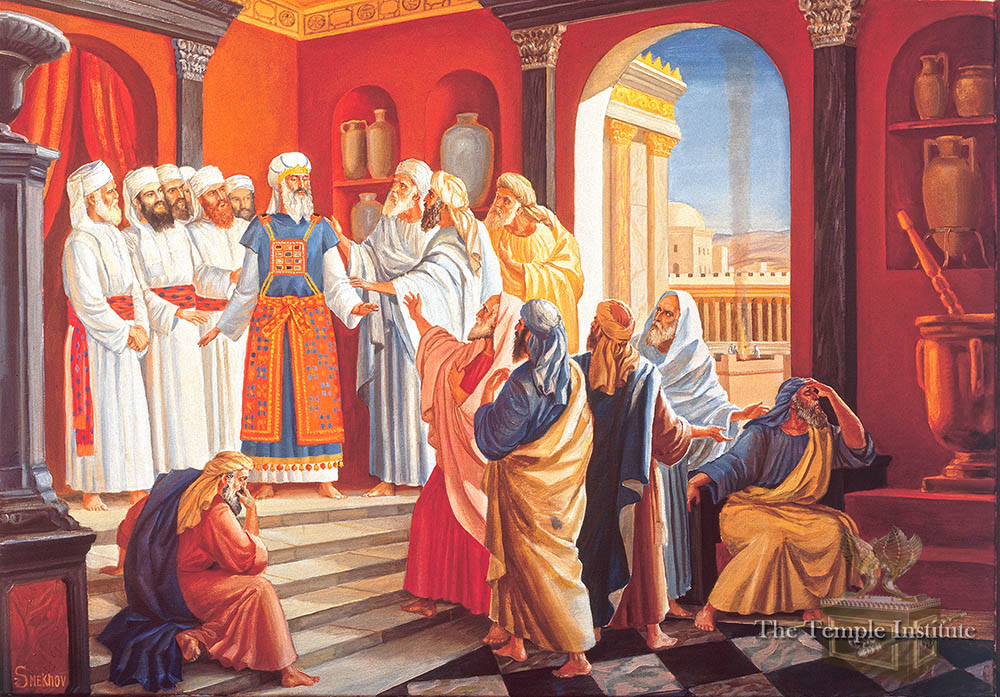
Mushite priests vs Aaronid priests in the Bible.


In Vayikra, the point is often made that the only valid priests are the descendants of Aaron. This is made clear with the formula בְּנֵי אַהֲרֹן הַכֹּהֲנִים or הַכֹּהֲנִים בְּנֵי אַהֲרֹן.
The theory of the critics is that Leviticus is the work of Aaronid priests who were protecting their prerogatives. They wanted it made perfectly clear that they, and no one else, were the true priests.

As noted by the critics, outside of the material attributed to the Aaronid priests (specifically Deuteronomy) the priests are often called הַכֹּהֲנִים הַלְוִיִּם, which say the critics, suggests some sort of rivalry between the Levites, or a family of Levites, who thought they were entitled to serve in the Temple and the Aronids who wanted it made clear that right belonged to them alone.

But is there any other evidence of such a rivalry?
Yes, some.

When David first establishes himself in Jerusalem, he has no Temple, but he does have two high priests. This is stated explicitly in 1 Chronicle 15:11, and 1 Kings 4:4 where Abiathar and Zadok are named as co-high priests.

Who were these men?

About Zadok, very little is known. He appears out of nowhere in Samuel, but Chronicles identifies him as a descendant of Eleazer. We know far more about Abiathar.
Unlike Zadok, who is given no clear background story, Abiathar, a survivor of the massacre at Nob, is depicted as David's loyal friend during the dispute with Saul. Abiathar possesses the Ephod and uses it to answer David's questions.
Abiathar is also linked to Eli explicitly in Kings 2:27, and the connection is hinted at in other places.

Why did David need two High Priests?
Several answers are offered, but we will confine ourselves to the one that relates to this discussion.
Frank Moore Cross suggests that there were two religious cults at the time, one controlled by Aaronid priests who traced themselves to Aaron, and one controlled by Mushite priests who traced themselves to Moses.

About Zadok nothing is known, but Abiathar is a descendant of Eli.
In 1 Samuel 2:27, Eli receives a very strange prophecy.
"Now a man of God came to Eli and said to him, “This is what the Lord says: ‘Did I not clearly reveal myself to בֵּית אָבִיך when they were in Egypt under Pharaoh?"
As Chazal knew, God never reveals himself to Aaron in Egypt: the only revelation is to Moses. Moore takes this as evidence that Eli is a descendant of Moses, and a Mushite priest, while Chazal say this verse is evidence that Aaron did, indeed, prophesize in Egypt, though no such prophecy is recorded.
If we accept the suggestion that Eli, and his descendant Abiathar, were Mushite priests the answer to the question snaps into place. David, the shrewd politician, wanted to be seen as legitimate by people who worshipped with the Mushites and by people who worshipped with the Aaronids. Choosing one denomination over the other might be asking for trouble, so took a high priest from each group, and this arrangement continued until Abiathar backed the wrong heir, and was fired by Solomon
Is there any other concrete evidence of a Mushite priesthood?
Yes...
  • Judges 18:30 describes a priesthood in Dan, established by Mushites. The verse reads "Jonathan son of Gershom, son of Moses, and his sons were priests to the tribe of the Danites until the time the land went into captivity." which may suggest that these Mushite priests of Dan continued to serve at Jeroboam's temple in Dan.

Is there any other less concrete evidence of a Mushite priesthood?
Yes...
  • In Exodus, Moshe and Joshua act as priests.
  • The old poem attached to the end of Deuteronomy seems to identify Moshe as the founder of a priesthood:

    "About Levi he said: "Your Thummim and Urim belong to your faithful servant. You tested him at Massah; you contended with him at the waters of Meribah."

    Moshe is the faithful man, of Levi, who was tried at Massah and Meribah. The verse says the icons of priesthood belong to him as well.
  • There are several stories of conflict in the Torah, that may be interpreted as polemics against one of the two priesthoods, for example:

    a) In the Golden Calf story Aaron is the one who makes the young bull, and a bull is what was used in place of cherubim in the Bethel Temple. This may be coded criticism of the Bethel rites, which would have been administered by Aaronids. At the end of the story, Moses and the Levites go to battle against everyone corrupted by Aaron's act and as a reward, they are "consecrated to the Lord" and given a "blessing".

    This story also tells us the Levites were congratulated for "slaying their own brothers, companions, and relatives" and, in Deuteronomy, the old poem mentioned above suggests the Levites were rewarded with the priesthood because they "didn't recognize their brothers or children"

    b) In Numbers, the Bal Peor Heresy occurs "before the eyes of Moses" who seems powerless to address it. He fails to act. Instead, Pinchas, the Aaronid, saves the day, and for his actions, he is rewarded with "eternal priesthood" The text can be read as suggesting the priesthood passed to the Aaronites because they cleansed Israel from a Midianite taint, and Moses, of course, is married to a Midianite, and the father of half-Midianites. Eli, it must be remembered, also loses the priesthood because his two sons, like those who were guilty of the Baal Peor heresy,  "lay with women at the door of the Tent of Meeting"

    c) In Numbers 12 Moses is attacked by Miriam and Aaron for marrying the wrong woman (she is identified as a Cushite in this story, but Moses married a Midianite) but the issue becomes "Has God ONLY spoken to Moshe? Hasn't he spoken to us, too?" God answers by telling Aaron and Miriam that Moses outranks them both. The theme seems to be that Moses is superior to Aaron, despite the "mixed" ancestry.
Does this "prove' anything?
Of course, not. There are no proofs in interpretation.

Friday, March 19, 2021

New Intelligence Report on the 2020 Election Reveals All Your Republican Friends Were Wrong About Almost Everything

BOMBSHELL!

Highlights from a recently declassified Intelligence Report:

1) No foreign actor messed with voting machines. (All of your dumb Republican friends who said otherwise were wrong.)

2) Russia interfered massively on behalf of Trump again. China did nothing to help Biden (All your dumb Republican friends who said  it was the other way around were wrong)

3) Trump happily repeated (or let's say "laundered") lies about Biden and his son that were invented and planted by Russian agents. 

This report was completed when Trump was still president and declassified this week.

https://www.dni.gov/index.php/newsroom/reports-publications/reports-publications-2021/item/2192-intelligence-community-assessment-on-foreign-threats-to-the-2020-u-s-federal-elections

Friday, February 19, 2021

Why don't we have a Mishkan today?

Before Jews had access to the Temple Mount they used a temporary structure in Shilo based on an earlier temporary structure constructed in the desert. 

Why aren't Jews interested in temporary structures anymore?

 We don't have access to the Temple Mount today. A rebuilt Temple is, for the moment, impossible. So why don't we set up a temporary Mishkan like structure to temporarily hold us over? 

The answer, obviously, is that animal sacrifice is ridiculous and no one really wants to see it return.

Also, Judaism today is controlled by Rabbis. If we built a new Shilo some control would have to be shared with Kohanim. And no one likes to share control.

Also, the people profiting from major Jewish pilgrimage sites (which operate like a temporary mishkan, with financial sacrifices rather than animal sacrifices required) have zero interest in sharing revenue with a new Shilo.

(The actual Messiah will run into the same problems when he tries to replace Uman with Moriah and installs a young, fit, Kohen as spiritual leader in place of our doddering nonagenarians)

To all those saying there are rules in Nach against bamot I say:

I refuse to believe our religious leaders couldnt find a work around if motivated 

Yochanan ben Zackai certainly managed to work around several rules.

The very fact that people are shrugging their shoulders shows me there is no appetite for animal sacrifice. 

People don't shrug their shoulders and give up immediately when it's something they really want. 

When it's something people really want (like Covid Minyanim and Weddings or sneaking into Uman for Covid Rosh Hashana) there are always people who can make it happen. 

Monday, January 04, 2021

Are we the new Saduccess?

A black preacher opened the new congressional term with a prayer that included a pun, and because the pun suggested some support for "woke" values like  tolerance, inclusion and equality, a horde of GOP Jews, led by Ben Shapiro, are now acting like they don't understand how language works.

Here is how the preacher concluded his prayer:
“We ask it in the name of the monotheistic God, [unintelligible], and God known by many names and by many different faiths, amen, and awoman,”
And here is how Ben Shapiro, noted Talmudic scholar, demonstrated his inability to recognize or appreciate puns.
"Amen" is a Biblical Hebrew word: אמן. It is a word simply meaning "may it be so." It has nothing to do with the word "man" or "woman" because it is FROM HEBREW. This is some of the dumbest s*** I have ever seen in my life.
And here is why I think all of this suggests the Ben Shapiros of the world are a bunch of Nuevo Sadducees.

The Talmud, you see, is full of puns. Many of these puns are used to support what men of the ancient world would have considered woke, or progressive values. The most famous example of them all might be the passage on Shabbat 104:
The Sages said to Rabbi Yehoshua ben Levi: Young students came today to the study hall and said things the likes of which were not said even in the days of Yehoshua bin Nun. T

Alef bet means learn [elaf] the wisdom [bina] of the Torah. Gimmel dalet means give to the poor [gemol dalim].
If there was a sneering Ben Shapiro in the wings, shouting "Those are letters. They have nothing to do with poverty or wisdom. This is some of the dumbest s*** I have ever seen in my life," the Talmud doesn't mention him. This is because much of what the Talmud records is radical, not reactionary. Using a play on language to support and advance messages of love, peace and understanding is radical. Its the 
sort of thing you do when you're the underdog, shut out of the national institutions and rejected by the establishment. Its the sort of thing you need to do when you're a black preacher, and its the sort of thing you mock when you're a comfortable member of the establishment, secure in your privilege, seeing no need for any changes. 

Of course, there were no Sadducees in 250 CE when Yehoshua ben Levi was active , but objecting to novel or "woke" ways of reading scripture is something Sadducees were known to do.  Today, we say they were "denying the Oral law" but what they were actually doing was denying new (or new seeming) interpretations of the written law that threatened their status. Its easy to frame Shapiro's dispute with the preacher in the same terms. The preacher wants people to think about inclusiveness, so he offers a pun on the word "Amen." Sadducee Shapiro feels threatened by ideas of inclusiveness so he acts oblivious to the pun, and instead pretends that the preacher is ignorant of the truths of biblical vocabulary. 


Tuesday, October 27, 2020

Kotzo shel Yud by Yehuda Leib Gordon

Hebrew woman, who knows your life?
You were born in obscurity and in obscurity will you depart,
Your woes and your joys, your hopes and desires
Are born within you, and inside you they die.
The earth and its fullness, all pleasure and comfort
Are vouchsafed to daughters of other nations.
But the life of a Jewess is perpetual servitude,
Never leaving her store to go one place or another;
You conceive, give birth, you nurse, you wean,
You bake and you cook, and prematurely — you wither.

This is the opening stanza of Kotzo shel Yud by Yehuda Leib Gordon (d 1892)

The full version of the poem can be found here, with a nice translation by Stanley Nash. 


Thursday, September 24, 2020

Contributions

Pet Peeve.
When rich people contribute a dollar amount and expect everyone else to contribute the same dollar amount without seeming to realize how math works.
For example, let's say a rich guy's nut is 10k per month, and thanks to his success and acumen he has an extra 10K per month lying around. That $500 donation is 5% of his disposable income for the month.
Now let's look at the normal guy. Say his nut is 7k per month, and he has 1k left over at the end of the month. The rich guy says "fair is fair, let's all give $500" but for the normal guy that's 50% of his disposable income.
Any thoughts on how to teach rich people computations?

Thursday, September 10, 2020

Why did God agree to banish Hagar?

On the first day of Rosh Hashana, we read about the banishment of Hagar and Ishmael. In the received text Sarah urges Abraham to do something unthinkable, and God co-signs the suggestion. 

As per always, the sages were alert to this problem. Let's examine the brilliant solution. 

In the Midrash (Pirkei de-R. Eliezer 29), Judah b. Tema states: "Sarah said to Abraham, 'Write a bill of divorce (get gerushin) for the handmaid, and send away this handmaid." In the Targum (Pseudo-Jonathan), "He sent her away" is rendered "He dismissed her with a bill (gitta)."

As a man of means in the ANE Abraham could have done basically anything he wanted. He could have kept Hagar around as a concubine. He could have added her to a harem. He could have sold her into slavery. But in this midrash, at least, Sarah is having none of that. She says, "Do this right, and by the book. Make sure she is free and clear. Don't make this sad situation worse. Release her fully, completely."

And God's response to this urging from Sarah? "Listen to your wife"

Trump downplayed Covid repeatedly


Here is a Tweet published by the President one month after he told Woodward he knew Covid was worse than the flu and very deadly. Right before Purim

Imagine he had told the truth, instead of putting his own interests first. Imagine this Tweet said "I've known for a month Covid is very deadly and more dangerous than the flu. Please wear masks and limit your social interactions"

Imagine he had behaved responsibly and presidentialy and unselfishly. 

Imagine the saved lives among his OJ admirers, of whom far too many contracted the disease a few days later and died during the first weeks of April.

Why aren't you shaking with anger?

Wednesday, September 09, 2020

A few thoughts about the radical, remarkable, audacious Seder Ha'Avoda, by Ishay Ribo.


I have a few things to say about Seder Ha'Avoda, an amazing reworking and reimagining of the Yom Kippur liturgy by Ishay Ribo. 

First a brief review for the uninitiated. Every Yom Kippur afternoon we recite a liturgy that recreates the High Priest's service. We recite the sacrifices he brought, the confessions he made, and the response of the crowd. It is the centerpiece of the service.

When the High Priest sacrifices, he splashes blood on the altar and counts:

One
One and one
One and two
One and three, etc


He's counting blood splashes, the splashes of blood that, for various reasons are believed and imagined to effectuate Atonement.

In Ribo's song, the Avoda is told over, but there is no sacrifice. The High Priest makes his confession with the same words that appear in the liturgy:

And thus he would say: “O Lord! Grant atonement for the sins, transgressions, and iniquities which I sinned before you – I and my household.

But when the time comes to count, there is no blood and no splashing. In a beautiful rhyme and rhythm that could only work in Hebrew, Ribo tells us what the crowd, or perhaps the priest himself, is counting:

And if one could recall the flaws, the deficiencies, all the sins and transgressions surely he would count thus: One, one and one, one and two, one and three, one and four, one and five…” and right away he would be ashamed, unable to bear the bitter taste of sin, the shame, the missed opportunity, the loss.

Instead of blood, the priest (or the people) are counting their failures, their sins, their shortcomings, their missed opportunities.

And the crowd responds with the words exactly as they appear in the liturgy:

Then the priests and the people standing in the courtyard, when they heard the name, the explicit Name come out from the mouth of the High Priest, would bow and prostrate themselves, falling on their face ‘Blessed be the name of the glory of his kingdom forever and ever!

Next, comes the second confession and the second count. And while the confession is again verbatim, the count is different yet again:

And if one could recall all the loving-kindness, the goodness, the compassion, and the salvations surely he would count thus: “One, one and one, one and two, one of a thousand, thousands of thousands and myriad myriads of wonderous miracles you have done for us day and night.

And again the people answer in the exact words of the liturgy:

Then the priests and the people standing in the courtyard, when they heard the name, the explicit Name come out from the mouth of the High Priest, would bow and prostrate themselves, falling on their face: ‘Blessed be the name of the glory of his kingdom forever and ever!

The idea here is that Atonement comes from within. We must recognize for ourselves what we have done wrong and recognize for ourselves all that has gone right and engage with both the good and the bad honestly, without vanity or depression, and through this exercise of introspection, a form of Atonement can begin.

This is a new idea, and not what the authors of the liturgy had in mind. They wanted us to remember the pageantry of the Avoda because for them it was witnessing the pageantry itself - the sacrifice and the confessions - that initiated Atonement.

But for Ribo, the idea is modern. We aren't made better by looking outward. We're made better by looking inward.

In the song, both counts are overwhelming. The count of failures is crushing, but the crowd comes to the rescue screaming ‘Blessed be the name of the glory of his kingdom forever and ever! The next count is equally shattering, but this count of blessings is a celebration and again the crowd provides the momentum screaming the same words ‘Blessed be the name of the glory of his kingdom forever and ever!'

For better or for worse. For good or for bad.

‘Blessed be the name of the glory of his kingdom forever and ever!'

Either way

‘Blessed be the name of the glory of his kingdom forever and ever!'

In sickness or in health, for richer or for poorer

‘Blessed be the name of the glory of his kingdom forever and ever!'

And that unconditional response is the beginning of love which is the beginning of Atonement. Loving yourself. Your sins. Your blessings.

To tie this radical idea to something so old, and so revered is nothing short of audacious. And in Ribo's audacity, we have a great gift, because by changing the idea of the Avoda he has given someone who is modern in his thinking a way to connect and find meaning in something old and foreign to contemporary sensibilities. And the miracle is this: his change feels more like a discovery, an uncovering of the essence of the service, rather than an audacious update. (when I think about what is good abut Hasidut, I think about how the great Hasidic masters worked the same trick of making radical changes and updates seem like the uncovering of the original idea.) 


Tuesday, September 08, 2020

The Uman Pilgrimage is Just Wrong: Here are 20 reasons


CHECK THIS OUT: Uman Rosh HaShanah: With the Real Tzaddik


1. It's wrong to go somewhere women aren't welcome.
2. It's wrong to split up your family during the holiday
3. It's wrong to force your sons to go to shul without you
4. It's wrong to leave your wife to handle the holiday alone
5. It's wrong to expect a ghost to intervene with God on your behalf
6. It's wrong to leave Israel for the holiday
7. It's wrong to lower your personal standard of behavior on Rosh Hashana
8. It's wrong to jeopardize your opportunity to say the long erev RH slichos because you were traveling
9. It's wrong to endanger your chances of praying with a minyan on erev Rosh Hashana because you were traveling
10. It's wrong to pray with a looser, less serious minyan that starts later and has a long kiddush davka on Rosh Hashana
11. It's wrong to pray to dead rabbis
12. It's wrong to ask a dead rabbi to act as your personal defense lawyer
13. It's wrong to have a mystical jamboree on someone's grave
14. It's wrong to spend Rosh Hashana drinking, weed-smoking and whoring
15. It's wrong to empower and enrich the crime bosses who control many of Uman's private plane and bus charters and the sale of marijuana.
16. It's wrong to go into debt to fund this trip to a carnival.
17. It's wrong to seek God through simple faith and joy.
18. It's wrong to imagine a trip to Uman will deliver a good living, answers to your questions, and a happy life.
19. It's wrong to replace the effort and the struggle that goes into character growth and repentance with a party trip to a grave
20. It's wrong to run to Uman to escape the hardships of life


CHECK THIS OUT: Uman Rosh HaShanah: With the Real Tzaddik