A Guest Post by Rafi G
(originally posted on the Life in Israel blog)
One of the common customs of Lag B'Omer is the chalaka, the first haircut for a 3 year old boy. It really does not have much to do with lag B'Omer - no matter when the boy's birthday is, the parents will delay the first haircut until the 3rd birthday. This custom, based on the Zohar, used to be common mainly among sefardim and chassidim, and today many Litvshe do it as well. However, many try to delay it until Lag B'Omer, especially if the 3rd birthday is around Lag B"Omer time, and then they throw the hair from the haircut into the fire.
The rabbonim of the Tzohar organization came up with a nice idea. A way to capitalize on the minhag of cutting the long hair of these children and actually do some good with it at the same time. They have decided to encourage those who perform this custom to collect the hair and donate it to organizations, such as Zichron Menachem, that make wigs for people with cancer.
It is a great idea, and is one that can help, at no cost to the donor, others in need. Unfortunately, the idea was only publicized today, as far as I know. At least, I only saw it today in the Arutz 7 website. Announcing such a program on "the day of" is a little pointless. Few people would see such an announcement, or have the patience at the last minute to deal with making the proper arrangements.
It is almost like the Chief Rabbinate starting a push to have Lag B'Omer bonfire pushed off to Sunday just 2 weeks prior to Lag B'Omer. How can anybody make proper arrangements under such short notice? Sure, a bonfire can be pushed off a couple of hours, but can school schedules be rearranged, can tests be rescheduled, under such short notice? of course not. And it is not like Lag B'Omer's arrivals surprised anybody. It happens every year on the same date. It is published in the regular calendars in Israel.
With just a little foresight these people would be able to get their great ideas actually implemented.
Click here to learn about how you can sell your products on Amazon and receive $75 in free clicks
Showing posts sorted by relevance for query lag b'omer. Sort by date Show all posts
Showing posts sorted by relevance for query lag b'omer. Sort by date Show all posts
Sunday, May 22, 2011
Tuesday, May 12, 2009
Ghosts of Lag B'omer Past
Here it is: The Lag b'omer Palooza you didn't even know you wanted:
- Why the Meron pilgrimage is an argument in favor of calling women for aliyot
- The Lag B'omer bonfire is every bit as foreign as the Yom Hashoa siren. [More]
- Jameel has translated an article which suggests our lag bomer celebrations came into existance because of a scribal error... [More]
- Yeshuahs For Sale (act fast) [More]
- Celebrating after the terror of mass plague: Why in the world is Lag B'omer a holiday? [Read it]
- Is the bonfire a religioun abomination on the order of insect snacks and sodomy? [Read it]
- Why don't we do anything for Rabbi Yehudah, author of the Mishna? [Read it]
Search for more information about Lag b'omer at 4torah.com.
Monday, May 09, 2005
Competing Customs
There are two customs for observing sefira, the period of semi-mourning between Pesach and Shavuot.
Custom A
The mourning observances begin on the first night of Sefira, and end on Lag B'omer, the 33rd day of Sefira.
Custom B
The mourning observances begin on Rosh Chodesh Iyar, and end on Shavuot. On Lag B'omer, the 33rd day of Sefira, the mourning is suspended.
Custom A never made much sense to me. It requires mourning during Nissan (the happiest month of the year (TM)) and the message of Lag B'omer is hard to understand. I mean, if you keep the first custom, what exacty are you celebrating on Lag B'omer? The end of the plauge which anihilated Rabbi Akiva's school? Mazal tov: Of course the plague ended: Everyone was dead! It doesn't seem, to me, like a reason for parties.
The second custom is more sensible. If you follow it, you won't mourn in Nissan (THMOTY) and Lag B'omer is not the very end of the plauge, but a day when the plague, like our mourning observances, was suspended.
Naturally, those of you who follow the Jewish world will not be surprised to learn that the sensible approach has fallen out of favor. Everyone I know follows custom A, and seems oblivious to the inconsistancies.
Custom A
The mourning observances begin on the first night of Sefira, and end on Lag B'omer, the 33rd day of Sefira.
Custom B
The mourning observances begin on Rosh Chodesh Iyar, and end on Shavuot. On Lag B'omer, the 33rd day of Sefira, the mourning is suspended.
Custom A never made much sense to me. It requires mourning during Nissan (the happiest month of the year (TM)) and the message of Lag B'omer is hard to understand. I mean, if you keep the first custom, what exacty are you celebrating on Lag B'omer? The end of the plauge which anihilated Rabbi Akiva's school? Mazal tov: Of course the plague ended: Everyone was dead! It doesn't seem, to me, like a reason for parties.
The second custom is more sensible. If you follow it, you won't mourn in Nissan (THMOTY) and Lag B'omer is not the very end of the plauge, but a day when the plague, like our mourning observances, was suspended.
Naturally, those of you who follow the Jewish world will not be surprised to learn that the sensible approach has fallen out of favor. Everyone I know follows custom A, and seems oblivious to the inconsistancies.

Tuesday, May 12, 2020
The Best Lag B'omer Songs
In this post, we'll look at the three most indispensable Lag B'omer songs, ranked in order, with clips to all of them provided.

Note: There are some links in this post that may generate small commissions for me if you click on them and make a purchase. Thanks in advance
Lag B'omer marks the end of the annual spring fast on haircuts and music, and while we still can't do very much about our hair during this ongoing Covid quarantine, there is nothing stopping us from enjoying some music.
In fact, many schools and synagogues are hosting Zoom events and drive-through events to celebrate. But what are the best Lag B'omer songs? Really, there are only three and if you attend any Lag B'omer event of any size you're sure to hear them over and over again.
Bar Yochai - THE WORST


Sample the Song
Format: Extremely long and repetitive piyut, oddly beloved by people who tend to hate piyutim
Traditional tune: Beyond Boring!
 [But, please lets give credit to Moshe Skier for trying to improve it]
Overall DovBear ranking: Wow, does this song suck. I don't think even the best performer can make it bearable. You want proof? Soul Farm
are truly fantastic performers and their version isn't much good, though they can't be blamed for failing to make bearable something that is inherently unbearable. L'kovod Hatana Ha'elokai - PERFECTLY FINE


Format: Long, repetitive random collection of verses, oddly beloved by people who tend to hate piyutim
Traditional tune: Not bad, not bad at all.
Overall DovBear ranking: A good song, that can be great in the hands of a talented artists. Unfortunately, I can't find such a performance on the Interwebs. You'll have to make do with this scratchy, difficult to enjoy version, though it offers the added fun of dancing Hasidim
Omar R. Akiva - THE BEST
Best version: Performed by Chilik Frank
Traditional tune: Awesome
Overall DovBear ranking: A great song, so great that even a terrible musician can't get it wrong. And boy are you in luck, because I have found a fantastic rendition of the song performed by Chilik Frank in which Reb Frank absolutely blows the doors off it. You're welcome. (Its just a shame that after about 3 minutes it cuts short, and turns into UGH Bar Yochai)
On the other hand, if you'd like to hear a version that does the opposite of blow the doors of things, you can listen to an a Capella group do a gentle, quiet folk version here.
Hey, are you hearing these songs for the first time? If so, I'm really curious to hear what you think of them. Please share your reactions in the thread.
Monday, May 19, 2014
What do the Lag B'omer Lovers really love?
For decades, we all thought that Abner Doubleday woke up one morning and invented baseball in Cooperstown, New York. In honor of his achievement, we put the Hall of Fame there and until this day, millions make a pilgrimage to the sleepy, little town in upstate New York to honor and celebrate the game they love.
Only, now we know that Abner Doubleday didn't invent baseball. Now we know that the game developed contingently, over time, and uses rules borrowed from English games. Turns out, the old story abut Abner was 100 percent false.
Does anyone among the mentally sane believe that acquiring this knowledge "sucked the joy" out of baseball? Has knowing the truth about its origin's "ruined" the game? Of course not. Yet, all over the Jewish World you find Lag B'omer lovers screaming that by telling the truth about the origins of the bonfire, or about Rashby's role in creating the Zohar, the rationalists have destroyed Lag B'omer.
All this tells me is that the Lag B'omer fans don't really love their game. They love the story. If they loved the game, they'd continue to enjoy it irrespective of how it developed. But for them the fun isn't in listening to music at a bonfire. For them the fun isn't it dancing. They don't love Lag Ba'omer. They love the phony story that surrounds it.
Search for more information about ### at4torah.com
Tuesday, May 08, 2012
In Favor of Lag B'Omer Trips
A Guest Post By E. Fink
Over on the Matzav, a letter that was posted before Lag B'Omer last year has been reposted without any mention that it is a rerun. Basic honesty and decency aside, they must have thought no one would realize. You can't fool me. I read and commented on this letter last year. I know this because I read the Matzav like Jon Stewart watches Fox News.
When they posted it last year I left some comments under my Matzav / VIN anono-name and I thought the letter writer had been eviscerated enough that Matzav would not dare publish the same letter again. I was wrong. So this time I am going all out. Here is a more snarky and detailed reply to the moron of the week. My commentary is in parenthesis.
Over on the Matzav, a letter that was posted before Lag B'Omer last year has been reposted without any mention that it is a rerun. Basic honesty and decency aside, they must have thought no one would realize. You can't fool me. I read and commented on this letter last year. I know this because I read the Matzav like Jon Stewart watches Fox News.
When they posted it last year I left some comments under my Matzav / VIN anono-name and I thought the letter writer had been eviscerated enough that Matzav would not dare publish the same letter again. I was wrong. So this time I am going all out. Here is a more snarky and detailed reply to the moron of the week. My commentary is in parenthesis.
Monday, May 16, 2011
Lag BaOmer: One Big Mistake?
From May 15, 2006
Jameel has translated an article which suggests our lag bomer celebrations came into existance because of a scribal error. Interesting -and plausible- theory.
However, Jameel sullies the effort by restating this defeated notion: I think that the medurot idea could have come from the method of notifying the Jewish people in Galut of the arrival of the new Jewish Month
Though it is true, that Jews of ancient Jerusalem lit bonfires to alert neighboring towns that a new month had been declared, there is no connection between this ritual and the bonfires of Lag B'omer. The new moon bonfire was discontinued more than 2000 years ago, and almost 1500 years passed before the Lag B'omer bonfires made their first appearence,in Safed (they weren't known in Jewish Europe for another hundred years at least.) Correction: The bonfires first appeared in Jewish Europe in the 17th century. They were long used in Christian Europe to celebrate saints, and for other religious purposes. Our Lag B'omer bonifres are derived from that.
Jameel has translated an article which suggests our lag bomer celebrations came into existance because of a scribal error. Interesting -and plausible- theory.
However, Jameel sullies the effort by restating this defeated notion: I think that the medurot idea could have come from the method of notifying the Jewish people in Galut of the arrival of the new Jewish Month
Though it is true, that Jews of ancient Jerusalem lit bonfires to alert neighboring towns that a new month had been declared, there is no connection between this ritual and the bonfires of Lag B'omer. The new moon bonfire was discontinued more than 2000 years ago, and almost 1500 years passed before the Lag B'omer bonfires made their first appearence,
Thursday, May 26, 2011
Is Lag B'omer the new Yom Kippur?
I've never been to Meron for Lag B'omer, but I've just concluded a conversation with someone who made the pilgrimage this year. His account demonstrated to me that this newish celebration has many elements in common with the Yom Kippur observances described in the Torah. Better yet, his description suggests rather strongly that many the secular objectives once achieved in Jeriusalem on Yom Kippur are now being met on Mount Meron.
Friday, April 26, 2013
Lag B'omer is the new Yom Kippur
Fortunate is the eye that saw all of this
I've never made the trip to Rashbi's grave for Lag B'omer, on the grounds that I think its pointless, but taam v'reach. Many of my friends, however, make the pilgrimage every year, and their descriptions of the event have convinced me that the Meron celebration is a modern Yom Kippur. . Many the secular objectives once achieved in Jerusalem on Yom Kippur are now being met on Mount Meron.
To start with, Yom Kippur was not originally about shul or prayers. When the Temple stood, the events of the day revolved around a pageant performed by the high priest. All the individual pilgrim had to do was stand in the fresh air with his friends, and watch your supreme religious official slaughter bulls and sprinkle blood and roast meat. At certain moments, you'd all stretch on the ground in adoration or submission to God and bellow a slogan. I imagine participating as an observer was at once thrilling, and inspirational -- and probably great fun, besides. Aside from the pomp of the ceremony, there was also the unshakable conviction that this was a surefire way to win blessing and favor for yourself. This was the day of atonement, after all, a day when your fate was sealed, a day when your behavior could win sustenance and merit to last the year. And all you had to do was show up.
Now compare this with what happens in our day at Meron. Last Lag B'omer, nearly half a million Jews made the pilgrimage to Meron. The highlight of the show is the lighting of the bonfire, an event that stands in (very) rough parallel to the avoda of the High Priest. The bonfire is lit by the chief rebbe, and often he performs various gesticulations with his hands and the torches that his Hasidim find amusing. Once the pyre is lit, the music starts to play and for the next several hours the people dance.
The Meron celebration occurs in three place: In the tomb itself, at the bonfires of various Hasidic sects, and on the streets leading away from the mountain. What is the difference? Let one of my friends explain: "In the tomb its Yom Kippur; at the bonfires its Simchas Torah; everywhere else its Purim."
Some who congregate inside the tomb itself. say the entire book of Tehillim. One told me, 'Last year, I asked for a shidduch for my daughter. She was married last winter. I'm back to say thank you and to ask for more.' Another told me he believed Shimon Bar Yochai was standing on the tomb with his arms open, dispensing blessings. "All we have to do is ask", he said "And we will receive.'"
Is there another day like this in Judaism? True, most non-hasidim don't think of Lag Bomer as a day of pilgrimage, or a day in which blessings can be won, but many of the 500,000 people who travel to Meron do see it that way. To them Lag Bomer matters, and for many of the same reasons that Yom Kippur mattered to our forefathers. The forces that bring those believers to Meron are the same forces that once drove our ancestors to to the Temple on Yom Kippur
Monday, May 15, 2006
The Muqata: Lag BaOmer: One Big Mistake?
Jameel has translated an article which suggests our lag bomer celebrations came into existance because of a scribal error. Interesting -and plausible- theory.
However, Jameel sullies the effort by restating this defeated notion: I think that the medurot idea could have come from the method of notifying the Jewish people in Galut of the arrival of the new Jewish Month
Though it is true, that Jews of ancient Jerusalem lit bonfires to alert neighboring towns that a new month had been declared, there is no connection between this ritual and the bonfires of Lag B'omer. The new moon bonfire was discontinued more than 2000 years ago, and almost 1500 years passed before the Lag B'omer bonfires made their first appearence,in Safed (they weren't known in Jewish Europe for another hundred years at least.) Correction: The bonfires first appeared in Jewish Europe in the 17th century. They were long used in Christian Europe to celebrate saints, and for other religious purposes. Our Lag B'omer bonifres are derived from that.
However, Jameel sullies the effort by restating this defeated notion: I think that the medurot idea could have come from the method of notifying the Jewish people in Galut of the arrival of the new Jewish Month
Though it is true, that Jews of ancient Jerusalem lit bonfires to alert neighboring towns that a new month had been declared, there is no connection between this ritual and the bonfires of Lag B'omer. The new moon bonfire was discontinued more than 2000 years ago, and almost 1500 years passed before the Lag B'omer bonfires made their first appearence,
Tuesday, August 18, 2009
Please don't miss the many levels of irony
Godless archaeologists have discovered a Roman mansion in Jerusalem that appears to have been destroyed by the earthquake that shook Jerusalem in 363. Along with destroying the mansion, this earthquake is believed to have been one of the factors that led to the cancellation of Emperor Julian's attempt to build a Third Temple in Jerusalem.
Along with being the last non-Christian Emperor of Rome, Julian was a traditionalist who wished to restore Roman glory and undermine nascent, yet insurgent Christianity. He thought ordering the Temple rebuilt would demonstrate that Christian successionist claims were false. Unfortunately, in the minds of Christians the earthquake proved the precise opposite. They took the failure of the project and Julian's death that same year as unmistakable proof that God had given up on the Jews and was displeased with Julian's refusal to accept this.
For their part, the Jews made the day of the earthquake into a minor fast day. Today we know it as Lag B'Omer.
Muqata: Lag B'omer: One Big Mistake
Muqata: Facinating new discovery in Ir David
J Post: Magnificent Roman mansion' uncovered in City of David
DB: Ghosts of Lag B'omer Past
Search for more information about lag bomer at 4torah.com.
Along with being the last non-Christian Emperor of Rome, Julian was a traditionalist who wished to restore Roman glory and undermine nascent, yet insurgent Christianity. He thought ordering the Temple rebuilt would demonstrate that Christian successionist claims were false. Unfortunately, in the minds of Christians the earthquake proved the precise opposite. They took the failure of the project and Julian's death that same year as unmistakable proof that God had given up on the Jews and was displeased with Julian's refusal to accept this.
For their part, the Jews made the day of the earthquake into a minor fast day. Today we know it as Lag B'Omer.
Muqata: Lag B'omer: One Big Mistake
Muqata: Facinating new discovery in Ir David
J Post: Magnificent Roman mansion' uncovered in City of David
DB: Ghosts of Lag B'omer Past
Search for more information about lag bomer at 4torah.com.
Wednesday, May 18, 2011
Wishing you a happy, holy hasidic lag b'omer
The preceding video has been posted for the sole purpose of making you feel insecure about your own observances. If you did not participate in a Tish conducted precisely in the fashion shown in this video, its altogether likely your lag b'omer was a waste, a ruin, a squandering and a lost opportunity.
Be sure to endure the God-awful music until about 4.21, at which point you will be rewarded wth the holy blessing of seeing the revered and exalted rebbe wave his longbow like a crosier and shoot arrows at his flock.
Search for more information about Lag B'omer at 4torah.com.
Sunday, March 09, 2008
celebrating after the terror
A Guest Post by Rafi G.
I was recently in the car driving somewhere and heard on the radio an interesting item. They have all sorts of filler shows on the radio to fill slots of 2 or 3 minutes between the end of a talk show and the top of the hour news. Some of these fillers are very interesting. One such show is a show where the host spends two or three minutes analyzing and conjugating a Hebrew word. Another such show is a description of a Jewish day (e.g. a holiday or some important day in Jewish history).
So, I was in the car and turned on the radio and heard the show describing a Jewish holiday. I have no idea why they chose Lag B'Omer at the time (about a week or two ago), as I turned it on in the middle of the show, but that was the topic. The host (a woman) gave the basic description of Lag B'Omer.
I cannot point to anything specific that she said that made me think of this, but as she was describing the deaths of Rabbi Akiva's students, I was struck by a thought that seems to be relevant today.
I started wondering how it could be that for 33 or so days, Rabbi Akiva's students drop dead like flies from a horrible plague. Finally the dieing stops. The day the deaths stop becomes a day of celebration. It makes no sense. What about mourning the dead? Why is it that the day they stopped dieing has become a great day of celebration with weddings and parties, when we should be mourning the deaths of the last month? How can we transition like that from mourning to celebration?
The thought came to me that the deaths of all these students was a horrible disaster and was, and still is, a time of mourning. But, at some point, we must move on. We don't forget the dead, but life goes on and we have to renew our spirits to celebrating life and living our lives. So we mourn for 33 days, but then we re-embrace life to the fullest, with all levels of celebration. We move on.
After the deaths on Thursday night in the horrible terrorist attack in Yeshivas Merkaz Ha'Rav in Jerusalem, we mourn and remember the dead. I lit a 24 hour candle for their memories before Shabbos. How can we do anything, how can we go to a kiddush, play ball, go to an engagement party, a wedding etc. so soon after the horror?
The answer is that, like Lag B'Omer, we have to move on. We have to re-embrace life and celebrate our happy moments, while remembering the victims. It is Adar, and it is meant to be a time of happiness and joy. It might be difficult to get into the mood at first, so soon after what happened, but that is what we must do. We have to motivate ourselves to celebrate.
I was recently in the car driving somewhere and heard on the radio an interesting item. They have all sorts of filler shows on the radio to fill slots of 2 or 3 minutes between the end of a talk show and the top of the hour news. Some of these fillers are very interesting. One such show is a show where the host spends two or three minutes analyzing and conjugating a Hebrew word. Another such show is a description of a Jewish day (e.g. a holiday or some important day in Jewish history).
So, I was in the car and turned on the radio and heard the show describing a Jewish holiday. I have no idea why they chose Lag B'Omer at the time (about a week or two ago), as I turned it on in the middle of the show, but that was the topic. The host (a woman) gave the basic description of Lag B'Omer.
I cannot point to anything specific that she said that made me think of this, but as she was describing the deaths of Rabbi Akiva's students, I was struck by a thought that seems to be relevant today.
I started wondering how it could be that for 33 or so days, Rabbi Akiva's students drop dead like flies from a horrible plague. Finally the dieing stops. The day the deaths stop becomes a day of celebration. It makes no sense. What about mourning the dead? Why is it that the day they stopped dieing has become a great day of celebration with weddings and parties, when we should be mourning the deaths of the last month? How can we transition like that from mourning to celebration?
The thought came to me that the deaths of all these students was a horrible disaster and was, and still is, a time of mourning. But, at some point, we must move on. We don't forget the dead, but life goes on and we have to renew our spirits to celebrating life and living our lives. So we mourn for 33 days, but then we re-embrace life to the fullest, with all levels of celebration. We move on.
After the deaths on Thursday night in the horrible terrorist attack in Yeshivas Merkaz Ha'Rav in Jerusalem, we mourn and remember the dead. I lit a 24 hour candle for their memories before Shabbos. How can we do anything, how can we go to a kiddush, play ball, go to an engagement party, a wedding etc. so soon after the horror?
The answer is that, like Lag B'Omer, we have to move on. We have to re-embrace life and celebrate our happy moments, while remembering the victims. It is Adar, and it is meant to be a time of happiness and joy. It might be difficult to get into the mood at first, so soon after what happened, but that is what we must do. We have to motivate ourselves to celebrate.
Monday, May 01, 2006
No sirens, no bonfires
DovBear: Lag B'omer thoughts: "Those of you who oppose Yom Hazikoron observances like the siren, on the grounds that this is not a Jewish practice are required to oppose the practice of lighting bonfires on Lag B'omer.
Bonfires were known in Christian Europe as a way to honor Chirstian saints as far back as the tenth century. They don't appear as a Jewish practice until the 16th century.
Christian scholars say that this practice of celebrating saints with bonfires is traced to pagan, pre-Christian practices, which were later adapted by the local people to Christianity. Indeed, the Celtics made bonfires to honor some of their deities and spirits. No one would ever claim that these Celtic practices, going back into old England, were originally of Jewish origin.
The Lag B'omer bonfire is every bit as foreign as the siren. If one is out, so is the other."
Bonfires were known in Christian Europe as a way to honor Chirstian saints as far back as the tenth century. They don't appear as a Jewish practice until the 16th century.
Christian scholars say that this practice of celebrating saints with bonfires is traced to pagan, pre-Christian practices, which were later adapted by the local people to Christianity. Indeed, the Celtics made bonfires to honor some of their deities and spirits. No one would ever claim that these Celtic practices, going back into old England, were originally of Jewish origin.
The Lag B'omer bonfire is every bit as foreign as the siren. If one is out, so is the other."
Thursday, May 26, 2005
Lag B'omer thoughts
Those of you who oppose Yom Hazikoron observances like the siren, on the grounds that this is not a Jewish practice are required to oppose the practice of lighting bonfires on Lag B'omer.
Bonfires were known in Christian Europe as a way to honor Chirstian saints as far back as the tenth century. They don't appear as a Jewish practice until the 16th century.
Christian scholars say that this practice of celebrating saints with bonfires is traced to pagan, pre-Christian practices, which were later adapted by the local people to Christianity. Indeed, the Celtics made bonfires to honor some of their deities and spirits. No one would ever claim that these Celtic practices, going back into old England, were originally of Jewish origin.
The Lag B'omer bonfire is every bit as foreign as the siren. If one is out, so is the other.
Bonfires were known in Christian Europe as a way to honor Chirstian saints as far back as the tenth century. They don't appear as a Jewish practice until the 16th century.
Christian scholars say that this practice of celebrating saints with bonfires is traced to pagan, pre-Christian practices, which were later adapted by the local people to Christianity. Indeed, the Celtics made bonfires to honor some of their deities and spirits. No one would ever claim that these Celtic practices, going back into old England, were originally of Jewish origin.
The Lag B'omer bonfire is every bit as foreign as the siren. If one is out, so is the other.
Thursday, May 19, 2011
How the Lag Bomer bonfire is like the Yom Hashoah siren
Those of you who oppose Yom Hazikoron observances like the siren, on the grounds that this is not a Jewish practice are required to oppose the practice of lighting bonfires on Lag B'omer.
Bonfires were known in Christian Europe as a way to honor Chirstian saints as far back as the tenth century. They don't appear as a Jewish practice until the 16th century.
Christian scholars say that this practice of celebrating saints with bonfires is traced to pagan, pre-Christian practices, which were later adapted by the local people to Christianity. Indeed, the Celtics made bonfires to honor some of their deities and spirits. No one would ever claim that these Celtic practices, going back into old England, were originally of Jewish origin.
The Lag B'omer bonfire is every bit as foreign as the siren. If one is out, so is the other.
Bonfires were known in Christian Europe as a way to honor Chirstian saints as far back as the tenth century. They don't appear as a Jewish practice until the 16th century.
Christian scholars say that this practice of celebrating saints with bonfires is traced to pagan, pre-Christian practices, which were later adapted by the local people to Christianity. Indeed, the Celtics made bonfires to honor some of their deities and spirits. No one would ever claim that these Celtic practices, going back into old England, were originally of Jewish origin.
The Lag B'omer bonfire is every bit as foreign as the siren. If one is out, so is the other.
Monday, February 14, 2011
Great Moments in Marketing: Valentines Day Chocolate with Badatz Certification
The kashrus organization that won't certify a pizza shop that permits mixed seating, has apparently signed off on Valentine's Day chocolate:

Bizarre in the extreme, no? Who in the Badatz world is looking for kosher Valentine's Day candy?
Via @rabbigreen who correctly considers this an example of "contemporary society or pop culture creeping into the Charedi World."
Just like upshurin and Lag B'omer bonfires
Other great moments in marketing
Search for more information about upshurin and Lag B'omer bonfires at 4torah.com.
Via @rabbigreen who correctly considers this an example of "contemporary society or pop culture creeping into the Charedi World."
Just like upshurin and Lag B'omer bonfires
Other great moments in marketing
Search for more information about upshurin and Lag B'omer bonfires at 4torah.com.
Wednesday, June 01, 2011
The Insider Reaction to New Square Violence
A Guest Post By E. Fink (with a lot of help from @azigra)
What follows is an article written by a New Square insider. A man who is unknown to me but known to the person who gave me this article. It was given to me in Yiddish and since I don't understand a lick of Yiddish, @azigra translated for me. Mistakes in grammar should be attributed to the author and the difficulty in translating from Yiddish to English.
The article illustrates the complicit nature of the general New Square public. After reading this you can see how something like this could happen. He says it is not a "white wash" but actually that is exactly what it is.
What follows is an article written by a New Square insider. A man who is unknown to me but known to the person who gave me this article. It was given to me in Yiddish and since I don't understand a lick of Yiddish, @azigra translated for me. Mistakes in grammar should be attributed to the author and the difficulty in translating from Yiddish to English.
The article illustrates the complicit nature of the general New Square public. After reading this you can see how something like this could happen. He says it is not a "white wash" but actually that is exactly what it is.
Monday, May 01, 2006
Thirteen Year-olds or Thirteen Gallons?
If I wrote a blog entry criticizing the famous segulah of sponsoring beverages at Meron on Lag B'omer, you'd all attack me, and yell at me for daring to criticize God's chosen people (ie: The Hasidim)
So let's let Yakov Horowitz do it instead:
Thirteen Year-olds or Thirteen Gallons?
Recalibrating our Charity Priorities
by Rabbi Yakov Horowitz
Please allow me introduce you to Yossi. Yossi is almost thirteen years old, and is in seventh grade at the local yeshiva. He was barely keeping pace in the lower grades, but when he started gemorah things began to unravel rapidly. He struggled to keep pace with his classmates for a few difficult months, but he kept falling further and further behind.
Yossi’s parents divorced a few years ago. His father remarried and moved out of the vicinity. When Yossi is at his mother’s house, he often davens at home on Shabbos morning. He is simply embarrassed to sit by himself in shul. During the week, his father tries to make the time to learn with him on the phone, but since he remarried; … well, you know how it is.
Yossi would have a decent chance at success in school if his parents could find and pay for a tutor to learn with him twice a week. But his heroic single mother is marshalling all her energy just to juggle the demands of work, her children and managing her home. Yossi’s rebbi knows of a kollel fellow who could tutor him and throw him a life preserver that could save him from becoming a statistic. The tutor would cost seventy-five dollars a week. Yossi’s caring rebbi went to his principal and asked him to try and find the funds to pay for the tutor. The (equally caring) principal sighed, thinking of how he was going to make payroll in three short days. He would love to help, but, … well, you know how it is.
Rochel or Rotel; Who Gets Your Charity Dollars?
I often think of the Yossi’s (and the Rochel’s) in our school system that are drowning due to the lack of funding for Jewish Education overall and for the types of intervention that could help them make it before they slide into the morass of at-risk behaviors.
I especially thought about Yossi and Rochel a few weeks ago as I read the Machberes column in The Jewish Press describing the preparation for the upcoming Lag Ba’omer and specifically the few lines describing the “hallowed custom” to supply “Chai Rotel” of wine and drinks to visitors in Meron.
For the past few years, large ads have been running in virtually all the Jewish newspapers during the weeks of sefirah encouraging prospective donors to contribute “Chai Rotel” of drinks to visitors to Meron on Lag Ba’omer, the yahrtzeit of Reb Shimon Bar Yochai.
Legend has it that some unnamed tzadik promised material benefits (yeshu’os) to those who contribute 18 ‘rotels’ (a rotel is a liquid measure; 18 rotels equals 54 liters or about 13 gallons) of wine or drink to provide visitors to Meron with refreshment during their stay. And if the past few years are any indication, I suspect that many such ads will be presented to the readers of Jewish newspapers in the weeks ahead.
Communal A.D.D.
I am personally uncomfortable with the notion of hawking ‘yeshuos’ in advertisements for tzedakos, and I may address this issue in a future column.
But for now, let’s discuss this “Chai Rotel” charity and how it stacks up with the needs of the Yossi’s and Rochel’s in our communities. Sadly, Yossi is not getting our attention as much as he should. There are no glitzy ads promising ‘yeshuos’ to people who will throw him a lifeline. In fact, if I may be so bold, I think that we suffer from communal A.D.D. (Attention Deficit Disorder), where we are finding it difficult to pay attention to the needs of the children in our own communities.
Honestly, with our rebbeim and moros grossly underpaid and our yeshivos struggling to make payroll, is providing gallons of alcoholic drinks to adults who made a conscious decision to spend Lag Baomer in Meron a pressing communal need that begs to be addressed? Aren’t there more appropriate venues for our charitable funds? Allow me ask another, more piercing question. Is it appropriate for someone who is receiving a tuition scholarship to go to Meron for Lag Baomer in the first place?
So, what will it be: Rochel’s or Rotels? Thirteen-year-olds or thirteen gallons?
While you ponder these questions, the sad and confused eyes of the children who are not making it in our school system are looking to you for answers.
© 2006 Rabbi Yakov Horowitz, all rights reserved
So let's let Yakov Horowitz do it instead:
Thirteen Year-olds or Thirteen Gallons?
Recalibrating our Charity Priorities
by Rabbi Yakov Horowitz
Please allow me introduce you to Yossi. Yossi is almost thirteen years old, and is in seventh grade at the local yeshiva. He was barely keeping pace in the lower grades, but when he started gemorah things began to unravel rapidly. He struggled to keep pace with his classmates for a few difficult months, but he kept falling further and further behind.
Yossi’s parents divorced a few years ago. His father remarried and moved out of the vicinity. When Yossi is at his mother’s house, he often davens at home on Shabbos morning. He is simply embarrassed to sit by himself in shul. During the week, his father tries to make the time to learn with him on the phone, but since he remarried; … well, you know how it is.
Yossi would have a decent chance at success in school if his parents could find and pay for a tutor to learn with him twice a week. But his heroic single mother is marshalling all her energy just to juggle the demands of work, her children and managing her home. Yossi’s rebbi knows of a kollel fellow who could tutor him and throw him a life preserver that could save him from becoming a statistic. The tutor would cost seventy-five dollars a week. Yossi’s caring rebbi went to his principal and asked him to try and find the funds to pay for the tutor. The (equally caring) principal sighed, thinking of how he was going to make payroll in three short days. He would love to help, but, … well, you know how it is.
Rochel or Rotel; Who Gets Your Charity Dollars?
I often think of the Yossi’s (and the Rochel’s) in our school system that are drowning due to the lack of funding for Jewish Education overall and for the types of intervention that could help them make it before they slide into the morass of at-risk behaviors.
I especially thought about Yossi and Rochel a few weeks ago as I read the Machberes column in The Jewish Press describing the preparation for the upcoming Lag Ba’omer and specifically the few lines describing the “hallowed custom” to supply “Chai Rotel” of wine and drinks to visitors in Meron.
For the past few years, large ads have been running in virtually all the Jewish newspapers during the weeks of sefirah encouraging prospective donors to contribute “Chai Rotel” of drinks to visitors to Meron on Lag Ba’omer, the yahrtzeit of Reb Shimon Bar Yochai.
Legend has it that some unnamed tzadik promised material benefits (yeshu’os) to those who contribute 18 ‘rotels’ (a rotel is a liquid measure; 18 rotels equals 54 liters or about 13 gallons) of wine or drink to provide visitors to Meron with refreshment during their stay. And if the past few years are any indication, I suspect that many such ads will be presented to the readers of Jewish newspapers in the weeks ahead.
Communal A.D.D.
I am personally uncomfortable with the notion of hawking ‘yeshuos’ in advertisements for tzedakos, and I may address this issue in a future column.
But for now, let’s discuss this “Chai Rotel” charity and how it stacks up with the needs of the Yossi’s and Rochel’s in our communities. Sadly, Yossi is not getting our attention as much as he should. There are no glitzy ads promising ‘yeshuos’ to people who will throw him a lifeline. In fact, if I may be so bold, I think that we suffer from communal A.D.D. (Attention Deficit Disorder), where we are finding it difficult to pay attention to the needs of the children in our own communities.
Honestly, with our rebbeim and moros grossly underpaid and our yeshivos struggling to make payroll, is providing gallons of alcoholic drinks to adults who made a conscious decision to spend Lag Baomer in Meron a pressing communal need that begs to be addressed? Aren’t there more appropriate venues for our charitable funds? Allow me ask another, more piercing question. Is it appropriate for someone who is receiving a tuition scholarship to go to Meron for Lag Baomer in the first place?
So, what will it be: Rochel’s or Rotels? Thirteen-year-olds or thirteen gallons?
While you ponder these questions, the sad and confused eyes of the children who are not making it in our school system are looking to you for answers.
© 2006 Rabbi Yakov Horowitz, all rights reserved
Thursday, May 10, 2007
Abomination?
ל הִשָּׁמֶר לְךָ, פֶּן-תִּנָּקֵשׁ אַחֲרֵיהֶם, אַחֲרֵי, הִשָּׁמְדָם מִפָּנֶיךָ; וּפֶן-תִּדְרֹשׁ לֵאלֹהֵיהֶם לֵאמֹר, אֵיכָה יַעַבְדוּ הַגּוֹיִם הָאֵלֶּה אֶת-אֱלֹהֵיהֶם, וְאֶעֱשֶׂה-כֵּן, גַּם-אָנִי. לא לֹא-תַעֲשֶׂה כֵן, לַיהוָה אֱלֹהֶיךָ: כִּי כָל-תּוֹעֲבַת ה אֲשֶׁר שָׂנֵא, עָשׂוּ לֵאלֹהֵיהֶם--כִּי גַם אֶת-בְּנֵיהֶם וְאֶת-בְּנֹתֵיהֶם, יִשְׂרְפוּ בָאֵשׁ לֵאלֹהֵיהֶם.
Take heed to thyself that thou be not snared by following them, after that they be destroyed from before thee; and that thou enquire not after their gods, saying, How did these nations serve their gods? even so will I do likewise. Thou shalt not do so unto the LORD thy God: for every abomination to the LORD, which he hateth, have they done unto their gods; for even their sons and their daughters they have burnt in the fire to their gods. What thing soever I command you, observe to do it: thou shalt not add thereto, nor diminish from it. [Deut 12:30]
Lag b'omar with the Satmar in Kiryas Joel
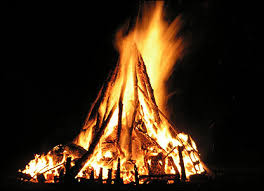
Background on the bonfire.
1 - There is no mention of them as a Jewish practice until the 16th century.
2 - It first appeared in Europe where there was a previous bonfire tradition
3 - In Christian Europe bonfires were used to honor saints. This practice of celebrating saints with bonfires is traced to pagan, pre-Christian practices, which were later adapted by the local people to Christianity.
4 - Celts made bonfires to honor their deities and spirits.
5 - The word "bonfire" itself is derived from a Celtic midsummer festival where animal bones were burnt to ward off evil spirits.
Per the verse cited above is the lag b'omer bonfire a תּוֹעֲבַת ה in the way that gay sex is a תּוֹעֲבַת ה ?
Take heed to thyself that thou be not snared by following them, after that they be destroyed from before thee; and that thou enquire not after their gods, saying, How did these nations serve their gods? even so will I do likewise. Thou shalt not do so unto the LORD thy God: for every abomination to the LORD, which he hateth, have they done unto their gods; for even their sons and their daughters they have burnt in the fire to their gods. What thing soever I command you, observe to do it: thou shalt not add thereto, nor diminish from it. [Deut 12:30]
Lag b'omar with the Satmar in Kiryas Joel
Background on the bonfire.
1 - There is no mention of them as a Jewish practice until the 16th century.
2 - It first appeared in Europe where there was a previous bonfire tradition
3 - In Christian Europe bonfires were used to honor saints. This practice of celebrating saints with bonfires is traced to pagan, pre-Christian practices, which were later adapted by the local people to Christianity.
4 - Celts made bonfires to honor their deities and spirits.
5 - The word "bonfire" itself is derived from a Celtic midsummer festival where animal bones were burnt to ward off evil spirits.
Per the verse cited above is the lag b'omer bonfire a תּוֹעֲבַת ה in the way that gay sex is a תּוֹעֲבַת ה ?
Subscribe to:
Posts (Atom)